
Website audit
Casual Records LV
casualrecordslv.com
14 September 2026
14 September 2026
Casual Records has three releases, seven videos, eleven credited names on one release and album art that holds up next to anything on a shelf. The website in front of it loses that. Below is every problem we found, each one reproduced in a clean browser and shown with the measurement that proves it. No opinions dressed up as facts.
We checked all of this on 14 September 2026, on a phone and on a computer, using a browser with nothing installed that could change what we saw. Every number below came off your live site. None of it is a guess. The label on each one tells you whether it is hurting you today or whether it can wait.
Squarespace is set to Argentine Spanish. Everything you typed yourself is in English, but every word Squarespace puts around it comes out in Spanish: the menu labels, the buttons, the store messages. Every visitor sees this, on every page.
It also works against you in search, though not the way you might expect. Google does not read the language setting in your code at all. It says it “uses the visible content of your page to determine its language,” and its own guidance is to keep the writing and the navigation on a page in one single language. Yours are two. You are handing Google a page that cannot make its mind up, which is the opposite of what you want when someone in Las Vegas searches for local hip hop.
Source for how Google handles this: Google Search Central, managing multi-regional and multilingual sites.


Click Merch and the first sentence anyone sees is “Ningún resultado coincide con tu búsqueda. Trata de eliminar algunos filtros.”
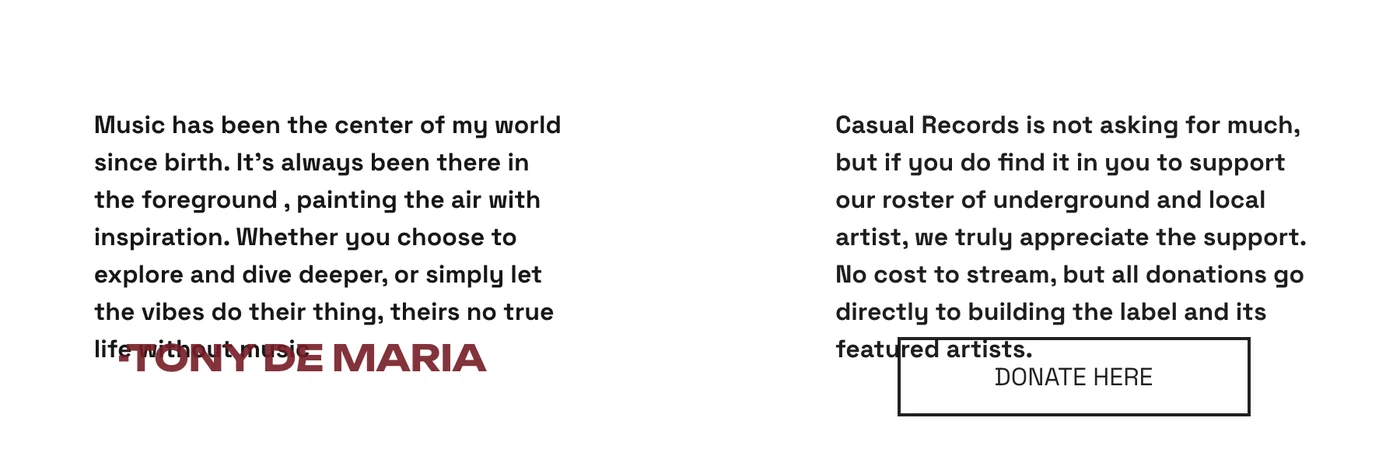
This one depends on the size of the window, so it is worth being precise. We measured the page at eight widths. Between roughly 900 and 1100 pixels wide, the signature “-TONY DE MARIA” prints across the final line of the bio. Between roughly 768 and 1024, the DONATE HERE button prints across the words “featured artists.” On a phone, and on a full width desktop window of 1280 or wider, neither happens.
That band is small laptops and an iPad held sideways. Not everybody sees it, but the people who do see it at the exact moment the page asks them for money.
The picture at the top of your homepage is 1.1 MB. Your homepage downloads about 1.1 MB of pictures in total, so that one file is basically all of it. On a phone on a venue's wifi, that is the difference between a page that opens and a page someone gives up on.
We downloaded that exact file and re-saved it in a modern format while writing this page, at the identical 1500 by 844 pixels. It came out at 101 KB. Same picture, same size on screen, 91% lighter.
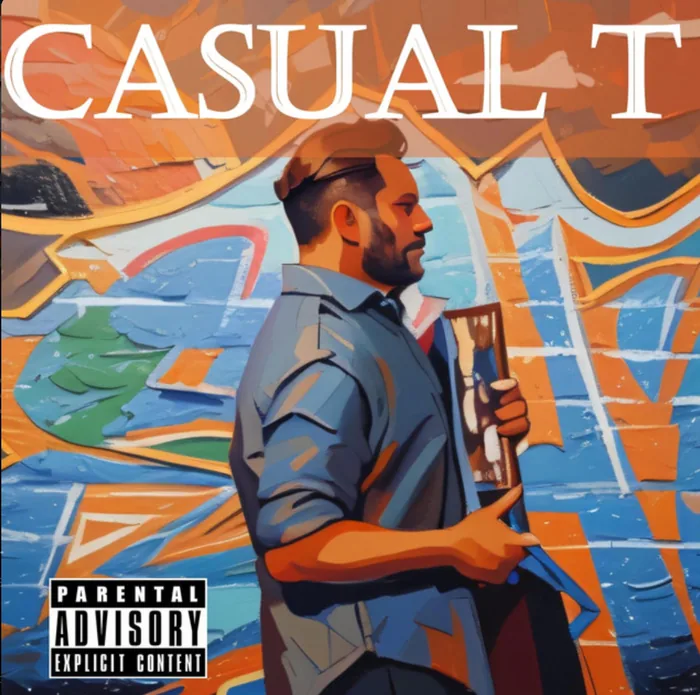
This one is our opinion rather than a measurement, so argue with it if you disagree. Here is why we think it. The graffiti behind the figure does not resolve into letters anywhere in the frame, the brushwork has the same texture across every surface including skin, and the hand holding the record does not fully close. The same picture is also the link preview image, so it is what shows up when anyone shares the site.
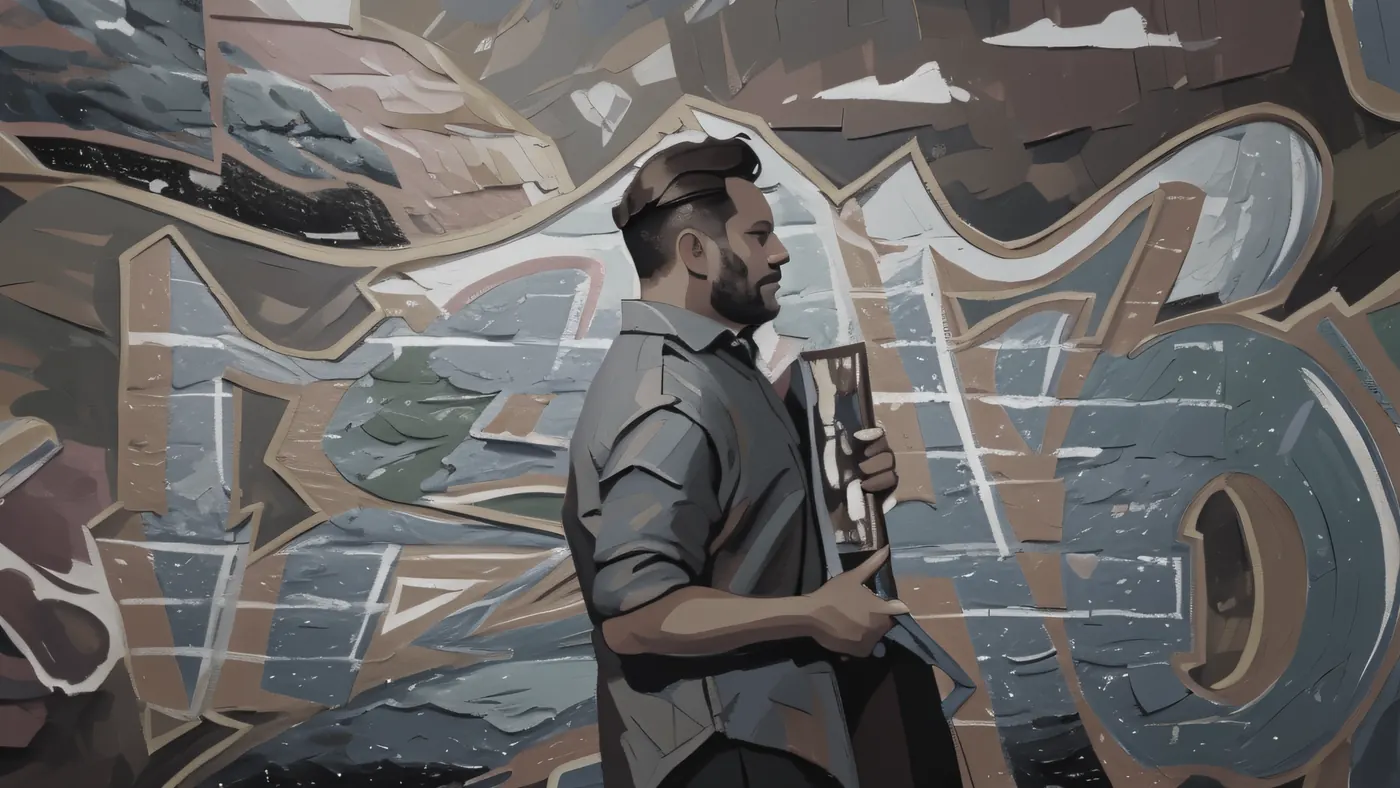
A label built on real artists should not lead with a picture of a person who does not exist. One session with a camera fixes this permanently, and it gives you a photo library for releases, press and merch instead of one image doing every job.
On an iPhone, a visitor scrolls into the Spotify player and the Apple Music player before ever reaching the words "Casual Records presents LED." The title, the featured artists and the production credits all sit underneath the players. "LED" is also printed twice in the same section.
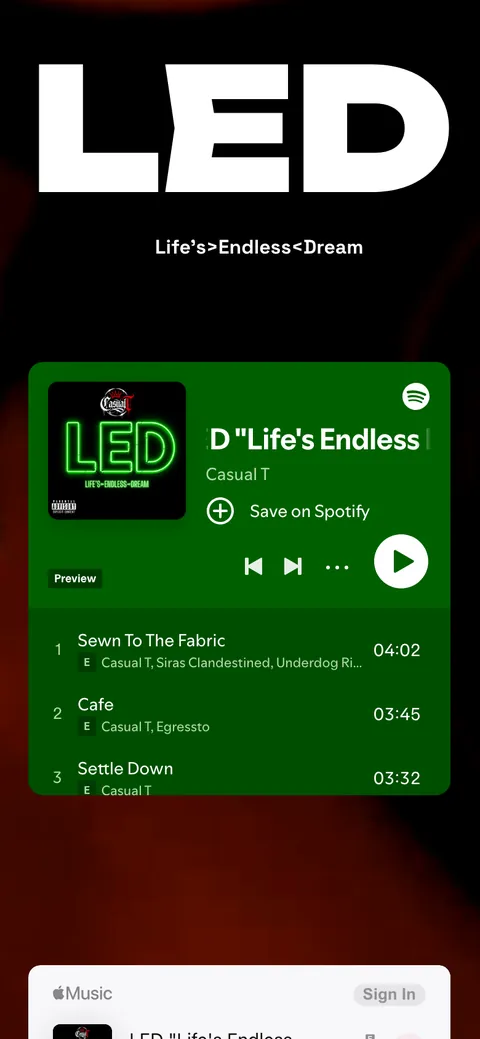
2 Mex, Underdog Rising, J Dub, Storm Shadow, Egressto, Siras Clandestine and Oscar Takahashi are the reason someone should care about this release. Their names are the last thing on the screen.
There is no Google Analytics, no tag manager and no Meta pixel anywhere on the site. There is no record of how many people have visited, which release they came for, or whether the donate button has ever been pressed. Every decision about the label's promotion is currently being made blind.
/merch is live, linked in the main navigation, and says COMING SOON. Underneath it, a working product filter sits over zero products. Anyone who clicks Merch hits a dead end, in Spanish.
When your site comes up in a Google search, the grey line of text underneath the title is supposed to be a sentence you wrote. On all four of your pages that sentence is blank, so Google grabs whatever words it likes off the page instead. Separately, a page is meant to have one main headline that tells Google what it is about. Your homepage has four competing ones, and the albums and videos pages have none. And the little block of information that tells Google your business name, phone number and address is on the site with every one of those fields left empty.
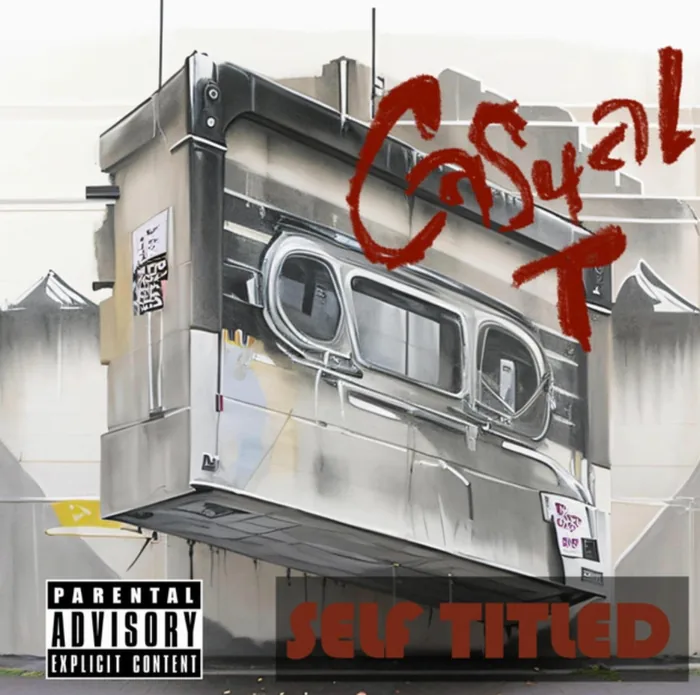
KC Ill Hand is the handwritten lettering that matches the "Casual T" scrawl on the Self Titled cover. The font file is uploaded to your site. The instruction that tells the site to actually use it got mangled, so nothing on the page is set in it. Your own handwriting is sitting in a folder on your website doing nothing.
The red background behind the whole LED section is a file called ink-in-water.jpg, and it is not served from your website's own storage. It comes out of a different Squarespace account's asset folder. Whoever set the site up pulled it in from somewhere else and it was never swapped for anything of yours.
An audit that only lists problems is a sales pitch. These are the things worth building the next site around, not replacing.
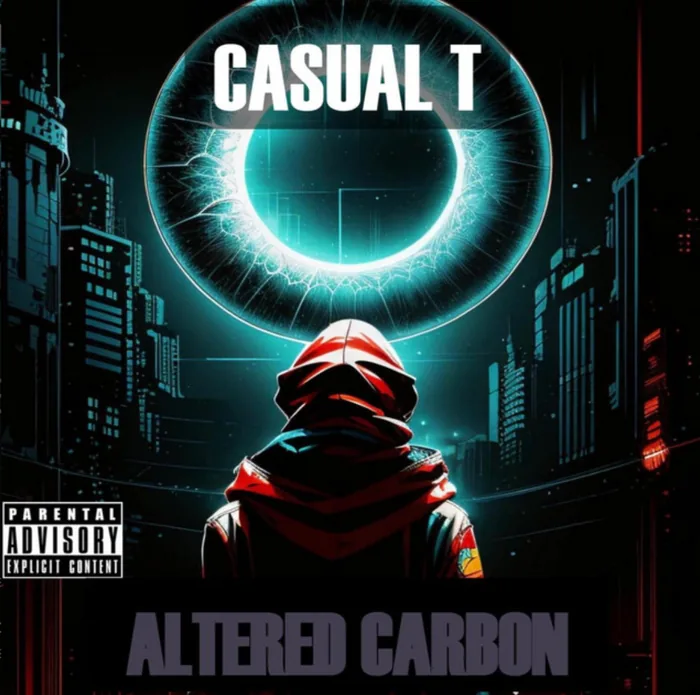
The album art. Three covers, all of them strong, all of them original. The Self Titled cover alone carries more brand than the entire current homepage.
The logo. The full lockup, CASUAL and RECORDS either side of the vinyl and blackletter C, is strong and it is yours. The only thing it needs is to be redrawn as a vector so it stays sharp at any size and can go on a shirt, a record sleeve or a poster without falling apart.
The roster. Eleven credited names on one release, seven featured artists and four producers, including Eligh. That is a real record, and right now the site buries it below two embedded players.
The catalog is already distributed. Spotify, Apple Music, Tidal and YouTube are all live and linked. Nothing needs to be re-uploaded. The site just has to point at them properly.
This is the one thing the current site cannot do at all. There is no blog, no collection, no feed and no audio hosting anywhere on it. Every piece of content is placed by hand inside Squarespace. Posting a mix every week means opening the builder and rebuilding a page, every week, forever.
There are two honest ways to do it, and which one is right depends entirely on what is in the mixes.
Are the weekly mixes your own recordings, or sets built out of other artists' tracks? Answer that and the build is straightforward either way. We are not guessing at it, because guessing wrong here is the kind of mistake that costs a label its catalog. It is question 1 in the list below.
Fourteen questions. The first three decide what gets built, so nothing starts until those are answered. The rest we need before anyone writes a word of the new site. Short answers are fine, and “I don’t know yet” is a real answer that we will work around.
Type straight into the boxes. Your answers save in this browser as you go, so you can stop and come back. When you are done, send them from the button at the bottom. If you would rather write on paper, use Print and every box turns into ruled lines.
Nothing here is a commitment. These are the answers we would need to quote the work honestly instead of guessing at it, and to build something you do not have to fix later.